
TRIAL SCHOOL PRESENTS:
2-Day Case Work-Up Intensive
Sponsored by The Spence Law Firm
Discover
Develop
Deliver
The Winning Story
Opening Statement
and Jury Selection
With Mel Orchard
& Jesse Wilson
Don’t just tell the story you want to tell.
Show the story that must be experienced.
November 20-21, 2026
9:30am-4:30pm
The Spence Law Firm
15 S Jackson St, Jackson, WY 83001
Sold Out!
Every case has facts.
Every trial has rules.
But only one story frames and requires the verdict.
Jury Selection and Opening statement are the building blocks where jurors begin to learn how to listen, formulate their roles, define what matters to their lives, and decide who they are in the right story that must be told.

This immersive two-day case work-up “on your feet” intensive is built around one central mission:
To frame, sequence, stage, and perform Jury Selection and Opening Statement in a way that softens jurors to their own stories and arms them to deliver justice.
Everything else—self-connection, client connection, harnessing and understanding emotion, audience connection and building intimacy, and performance, including the use of the Monologue and theatre tools—exists in service of these two essential trial skills.
Developed by Jesse Wilson, nationally recognized jury trial consultant, bestselling author, and Juilliard-theater graduate- and Mel Orchard, nationally celebrated trial lawyer, actor, and seasoned advocacy instructor, this program fuses the discipline and art of the theater with the real-world demands of trial advocacy.
This is not a seminar about tips and tricks.
This is a case work-up.
Your case. Your opening. Your voir dire.
WE DON’T TELL YOU WHAT TO SAY; NOBODY SHOULD.
THIS IS THE PLACE TO UNLEASH YOUR AUTHENTIC VOICE
AND MOVE YOUR JURORS TO ACTION.
The Framework:
The 3-Act Case Work-Up
The entire two-day intensive is structured around a 3-Act model, mirroring both classical storytelling
and the psychological journey jurors take from doubt to certainty:
Act 1
Self Connection
The Advocate as Instrument
Act 2
Client Connection
The Case as a Human Story
Act 3
Jury Connection
The Jury as Decision-Maker and Moral Agent
Each act builds toward one outcome: an Opening Statement and Jury Selection
that are clear, sequenced, embodied, and unforgettable.
You cannot sequence a case until you understand the human crossroads.
You cannot stage persuasion without presence.
The Core
Philosophy
The power of the winning story is an inside job.
So is winning communication.
Rather than masking fear, doubt, or hesitation,
Jesse and Mel will help guide you to:
Discover what is blocking clarity and presence
Transform those obstacles into sources of authority
Use emotional truth to frame the jury’s role from the first five minutes
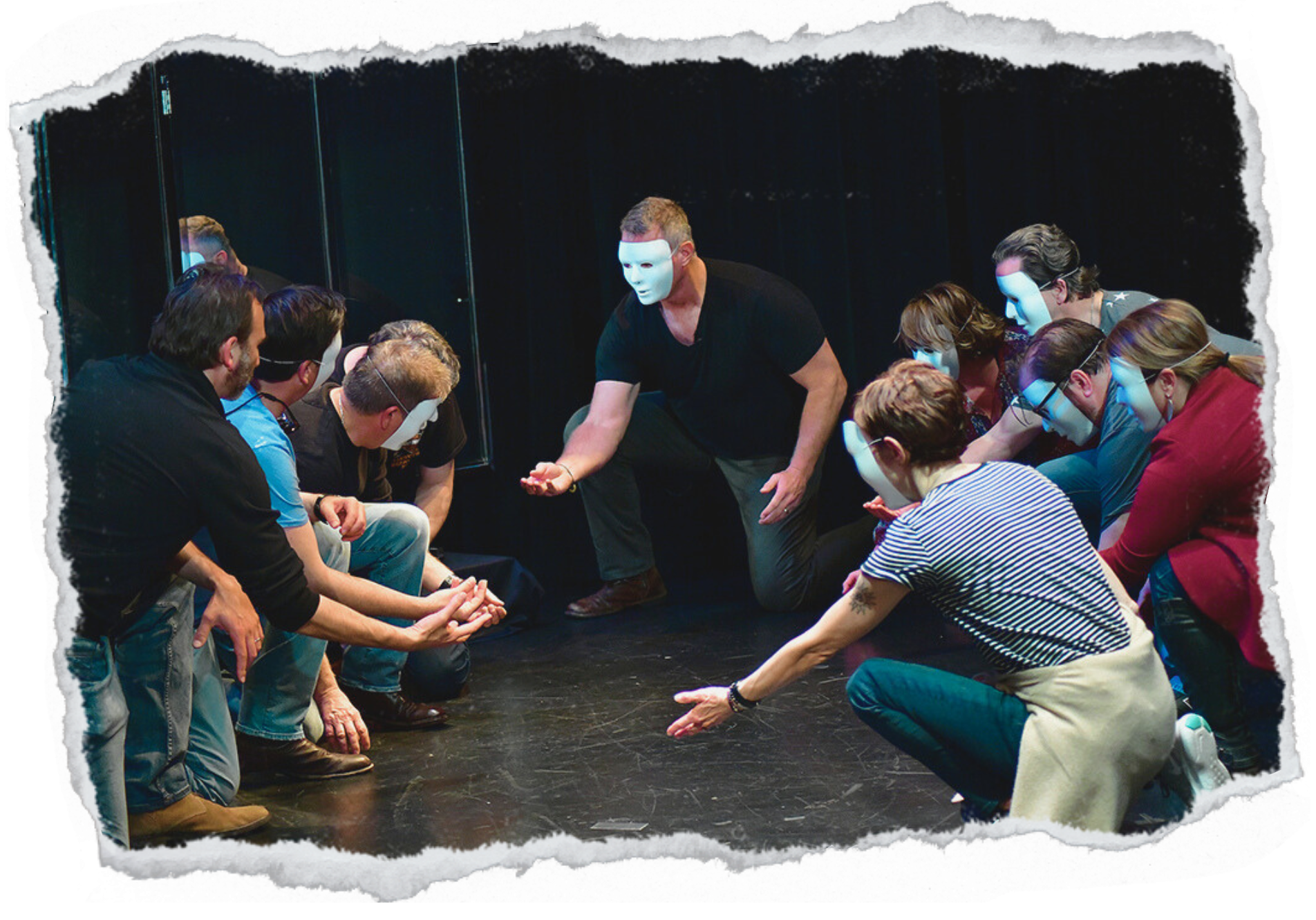
The primary case-development tool is the Monologue and Mask Method—a rigorous “digging device” used to:

Access the emotional heart of the case

Discover authentic, jury-ready language

Develop presence and credibility

Create Opening and Voir Dire narratives jurors can feel, not just hear
Day 1: Act 1 & Act 2
ACt 1
Self Connection
Framing Begins With the Advocate
Day One begins by sharpening the lawyer as the primary instrument of persuasion—because how you show up determines how jurors listen.
Key Areas of Work
(in service of Opening & Voir Dire):
The 5 Fundamental Human Emotions and how they shape:
The attorney’s credibility
The judge’s receptivity
The jury’s openness
Presence Power:
Non-verbal communication
Spatial awareness in the courtroom
Eye contact, stillness, and silence
Identifying conflict as an ally in case framing
Understanding how emotional state impacts:
Trust
Recall
Decision-making
Interactive Work:
Conflict / Struggle / Resolution exercises applied directly to:
Opening themes
Voir dire framing
High-performance communication training:
Breath
Body movement
Articulation
Timing and silence as persuasive tools
Act 2
Client Connection
(Victim to Victor)
Sequencing the Human Story
The focus shifts to client transformation, not as sympathy—but as strategy.
Core Concepts Introduced:
Defining “The Crossroad”:
The moment jurors must understand to decide liability, damages, and justice
Developing:
Case language
Themes
Power anchors that will repeat from voir dire through closing
Identifying “The Stretch”:
What the client had to endure
What the jury is now being asked to do
Interactive Work:
Client character development for Opening Statement
Aligning lawyer voice with client truth
Crafting emotionally honest, legally disciplined story arcs that sequence evidence and testimony
Day 2: Act 2 & Act 3
CLIENT MONOLOGUES — LIVE CASE WORK
Attorneys present the first round of Client Monologues, applying:
Conflict – Struggle – Resolution
These are not performances for performance’s sake.
They are case-development rehearsals for Opening and Jury Selection.
Each presentation receives guided peer feedback focused on:
Emotional clarity
Non-verbal authority
Narrative alignment with Opening themes
This is not critique.
It is collective case sharpening.
ACT 3
Jury Connection
Staging and Performing the Opening & Voir Dire
After lunch, attorneys integrate the work into trial-ready advocacy.
Integration Tools:
The 4 Steps of the Monologue
The Crossroad
The Stretch
The Greater Story
Key Discussions:
The Winning Story vs. The Whining Story
How imbalance destroys credibility in Opening
How jurors emotionally experience:
Voir dire
The first five minutes
The lawyer’s authority
Applied Case Work:
Revising monologues into:
Opening Statements
Jury Selection framing
Staging:
Where you stand
When you move
When you stop
Group feedback focused on:
Framing
Sequencing
Performance
The 8 Fundamentals of
Powerful Communication
(Applied to Opening Statement & Jury Selection)
Act 1
Discovery (Self)
1. Trusting vision and imagination
2. Transforming fear into freedom
3. Balancing senses and emotions
Act 2
Transformation (Client)
4. Defining the Crossroads
5. Mastering conflict, struggle, and resolution
Act 3
Performance (Jury)
6. Voice, breath, articulation, timing
7. Silence and non-verbal authority
8. Living the greater story with purpose
The Culmination:
Theater in the Bones
To truly perform an Opening Statement or Voir Dire with authority, tools are not enough.
Participants will create and perform an original, fully staged monologue from the client’s perspective
This is not theater for theater’s sake. It is an embodied rehearsal for persuasion.
The Result
A precise alignment between:
The lawyer’s presence
The client’s story
The jury’s role
Jurors do not merely listen.
They are framed, sequenced, and empowered/required to act.
About Mel Orchard
Mel tries cases around the country and has record breaking verdicts in many jurisdictions including Wyoming, Utah, Arizona, and Iowa – with settlements and verdicts over the past 33 years in the hundreds of millions of dollars. Mel has been inducted into several invite only organizations that celebrate legal excellence and ethical integrity including the International Academy of Trial Lawyers, International Society of Barristers, the Inner Circle of Advocates, The American College of Trial Lawyers, and The Summit Council.
Mel also devotes significant time to pro bono work through Lawyers and Advocates for Wyoming, and many local and national charities. Mel is a senior faculty member at The Trial Lawyer’s College where he has taught for more than 15 years and a founding member of Trial School. Mel’s mission is realized in large part by helping to improve the skills of trial lawyers across America.
About Jesse Wilson
Jesse Wilson is a communication specialist, best-selling author, and nationally recognized jury trial consultant whose work merges the disciplines of theater and law into a transformative storytelling system for trial advocacy.
A theater graduate of The Juilliard School, Jesse founded Tell the Winning Story, a breakthrough communication program that empowers trial lawyers to deliver high-impact presentations and prepares clients and witnesses to testify with authenticity, clarity, and emotional truth.
His Victim to Victor method grew out of his work co-developing a groundbreaking theater-behind-bars program in Colorado prisons—where he witnessed firsthand the life-changing power of reclaiming one’s story.
Jesse is the best-selling author of:
“Witness Preparation: How to Tell the Winning Story” and “The Most Important Juror: Embrace the Winning Story in Jury Selection, Opening Statement & Rebuttal”
His trainings are featured in national seminars, law-firm retreats, intensives, and workshops across the country.
He is also the creator of Lessons From The Stage, a personal transformation model used by therapists and counselors to help clients embody and share their greater stories.
Jesse lives in Colorado Springs with his wife Branda and their two children, Autumn and Nicholas.